The Academic Side of Middle School
The first few weeks of school students may be focused on finding their classes, where their friends are on campus, and remembering their locker combination. In this transition, academics and assignments can sometimes be on the back burner.
Middle school brings major changes. Students juggle multiple teachers, harder classes, and new expectations for independence. Missing assignments often stem from disorganization rather than a lack of caring.
Why Assignments Go Missing:
Executive functioning gaps: Skills like planning, task initiation, and tracking due dates are still developing in the brain.
Overwhelm: Falling behind on a few tasks creates anxiety and avoidance.
Communication barriers: Students may not know how to ask teachers for help or extensions
Actionable Support Strategies:
Focus on systems, not content: Help your child set up a clean workspace, use timers, and check off planner tasks instead of doing the work for them.
Tackle backlogs in chunks: Break missing work into small batches. Have your child complete one or two assignments, take a short break, and then return.
Encourage self-advocacy: Guide your student to email their teachers using a polite template to ask about makeup policies and current status.
Set realistic goals: Celebrate small wins. Moving from multiple missing assignments down to two—or raising a grade by a few percentage points—counts as real progress.
Partner with the school: Review guidance from KidsHealth on attending conferences and staying connected with teachers.
Counselors provide Academic Advising for students around the 9 week period for the fall semester. Sixth grade students typically receive Academic Advising before the first report card, while 7th and 8th grade students receive Academic Advising after grades are posted for the 1st 9 weeks. If a student receives special education services, their Case Manager will be providing academic advising support.
If your child is taking a High School Credit class, it is important to note the “drop” date, which changes if the class is a semester class vs. a year-long high school credit class. Currently, students may drop high school courses at three designated times during the year: fall semester-long courses in November, EOC (End of Course) courses in January, and yearlong or spring semester-long courses in April. If you have any questions regarding high school credit classes and drop dates, please contact your grade-level counselor.
Gifted and Talented Referral Window - Open August 18 - October 16, 2026
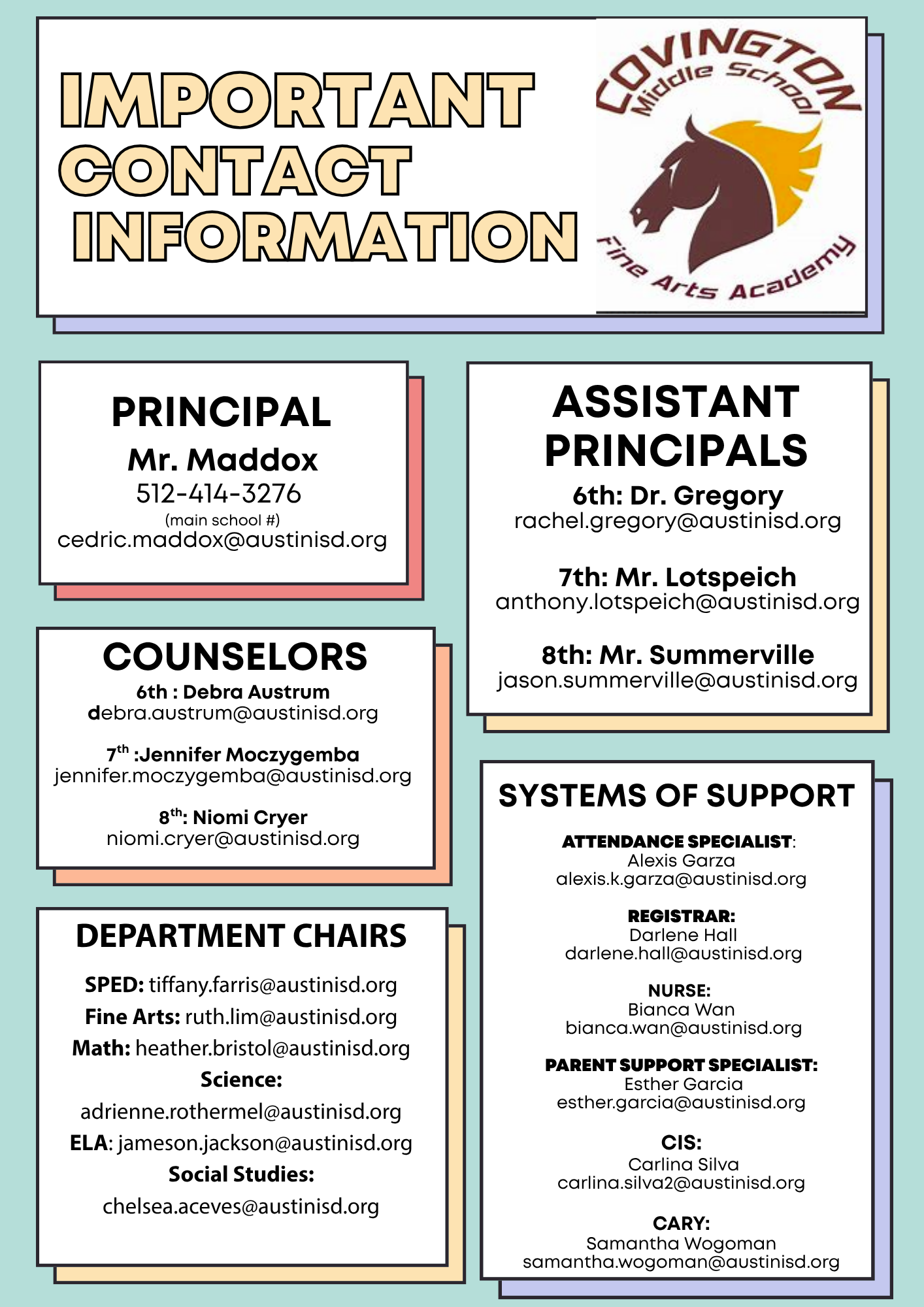
Families, teachers, or staff may nominate students for the GT screening process. The referral window for the 2026-27 school year is August 18 - October 16, 2026. Contact Adrienne Rothermel or Debra Austrum, GT Advocates, at (512) 414-3276 if you have questions about the process.
There is more information at the link below as well.
2026-27 AISD GT Referral Flyer